

500+ EXCLUSIVE PERIOD DESIGNS
SECURE ONLINE ORDERING
FSC SOURCED TIMBER
MADE IN YORKSHIRE
FAST TURNAROUND
BESPOKE AVAILABLE
Period Mouldings supplies a carefully curated range of traditional architrave mouldings for doors and windows, crafted in oak, pine and sustainably sourced hardwood timber. Our profiles are faithfully reproduced from historical references, making them ideal for period home restorations, sympathetic renovations and contemporary interiors that call for authentic architectural detail.
Traditional Wooden Architraves
A wooden architrave is an interior moulding fitted around door frames and window openings, concealing the joint between the plaster and the timber frame while adding architectural character.
In period homes, the choice of wood architrave profile is one of the most visible design decisions in a room.
Whether you need a solid oak architrave for a Georgian restoration, a pine architrave for a Victorian terrace or a traditional hardwood architrave for a contemporary new build, our range includes a profile for every style and budget.
Explore our range of:
Georgian Architraves
Victorian Architraves
Edwardian Architraves
Contemporary Architraves
Georgian architraves are interior mouldings inspired by the architectural style of the Georgian period (1714–1820). Characterised by balance, proportion and classical influence, Georgian mouldings complement the symmetry and refined detailing found in Georgian interiors.
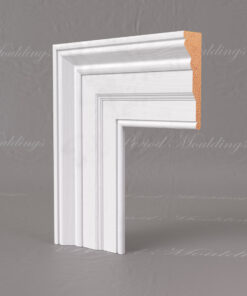
We supply our architrave moulding profiles in a range of FSC-certified timber species to suit different applications and budgets. Our solid wood architraves are the premium choice where the wood grain will be left visible, offering a rich, durable result that suits both period and contemporary interiors.
Pine architraves are the most popular choice for painted finishes, making them ideal for Victorian terraces, Edwardian hallways and new-build properties alike.
For customers seeking a hardwood architrave with the character of oak at a more accessible price point, we also offer selected profiles in sustainably sourced hardwood timber.
A door architrave is the decorative moulding that surrounds a door frame, covering the joint between the frame and the wall. It's both a practical and aesthetic element, hiding any gaps or uneven edges while adding a finishing touch to the doorway. Door architraves come in a wide range of profiles, from simple flat designs to ornate period styles, making them one of the easiest ways to add character to a room.
Yes, absolutely. A window architrave works in exactly the same way as a door architrave. It's fitted around the window frame to create a clean, finished edge where the frame meets the wall. Using the same wooden architrave profile throughout a room, on both doors and windows, creates a cohesive look and is very much the traditional approach in period and heritage properties.
The main differences come down to character, durability, and intended finish. Pine architrave is a softwood, making it lighter and easier to cut and fix. It's a popular choice where the architrave will be painted. Oak architrave is a dense, durable hardwood with a beautiful natural grain, and it's ideal where you want to apply a stain or clear varnish to show off the timber. Hardwood architrave is a broader category that includes oak and other dense timbers; hardwoods are generally more resistant to knocks and wear than softwoods, and they tend to hold a finer profile on intricate moulding details.
Yes. Our solid Pine, Tulipwood, Sapele and Oak architraves are cut from natural, sustainably sourced timber and is available across a range of traditional and period profiles. Unlike veneered or engineered alternatives, solid wood can be sanded, re-stained, and refinished multiple times, so it ages beautifully and will last the lifetime of your home.
An architrave moulding is the shaped profile that gives an architrave its decorative character. Rather than a flat, featureless strip of timber, the face of the board is machined into a specific cross-section, with curves, steps, and recesses that cast shadow and create depth. The profile you choose defines the style of the architrave: a simple ovolo or chamfer reads as contemporary, while a more elaborate ogee or torus moulding is associated with Georgian, Victorian, and Edwardian interiors.
The best starting point is the age and architectural style of your property. Victorian and Edwardian homes typically suit a traditional architrave with a prominent ogee or ovolo profile, often with a back-band detail. Georgian interiors tend to favour cleaner, more symmetrical profiles with a classical feel. For Arts and Crafts or Gothic Revival properties, a simple chamfered or stepped period architrave works well. If you're unsure, look at any original architraves elsewhere in the house and match the profile, keeping the detailing consistent throughout makes a real difference to the overall feel of a space.
For most standard door frames, a timber architrave between 60mm and 95mm wide is typical, wide enough to cover the gap between the frame and plasterwork, without looking out of proportion. Taller or grander doorways can take a wider profile, and in period properties it's common to see architraves of 100mm or more. As a rule of thumb, choose the width to suit the scale of the doorway and the room. For thickness, 15mm to 20mm is standard for most applications. If you're not sure, measure the reveal on your existing frame and get in touch. We're happy to help you find the right fit.